
By Lawrence
5 minutes
5 minutes
Steal Speed From the Moon
A ball fired below escape speed always comes back. Every lesson so far agrees. This one breaks the rule, on purpose.
The slingshot
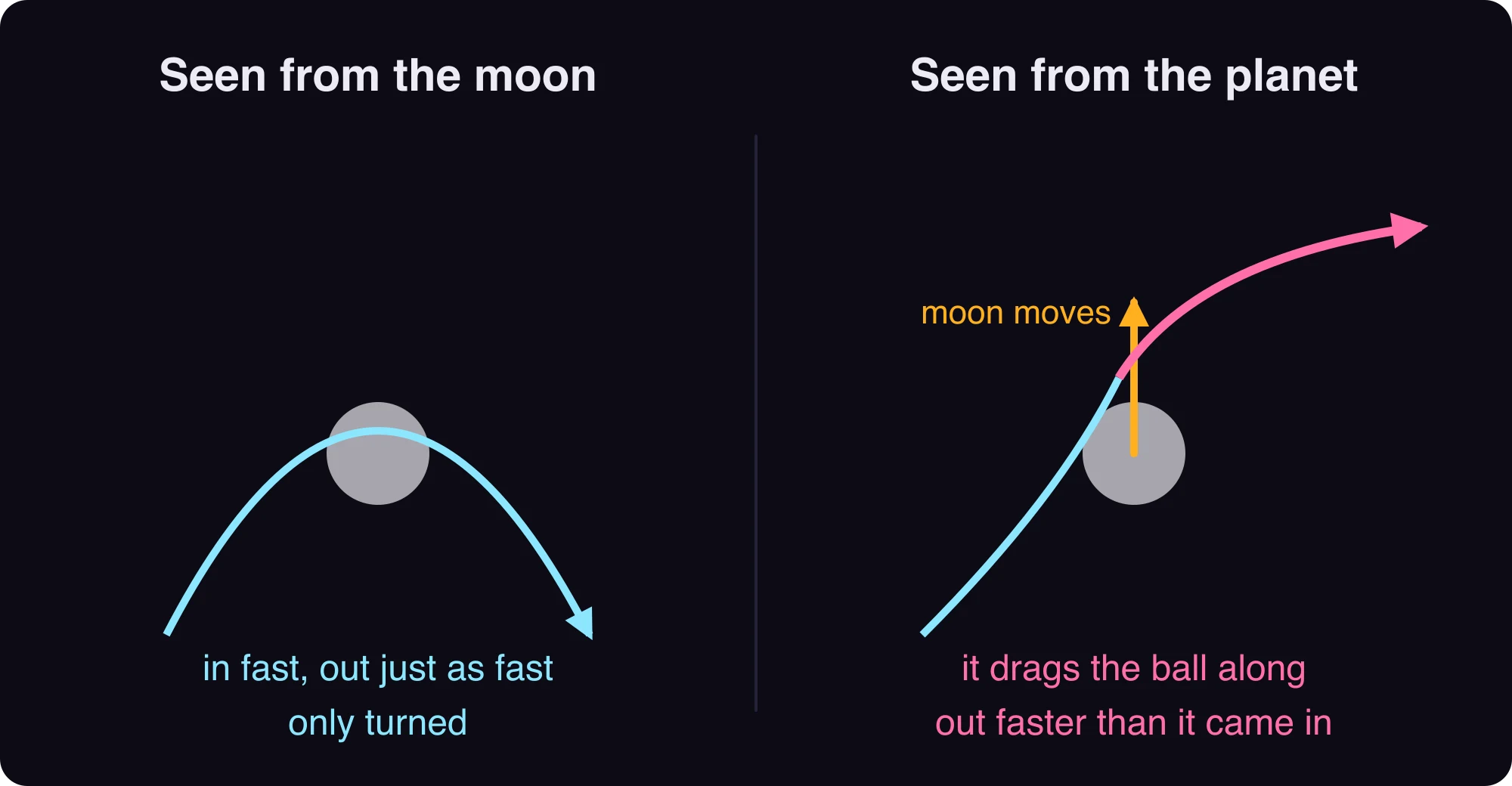
Picture the flyby from the moon's point of view. The ball swoops in, swings round, and leaves just as fast as it came. It only changes direction.
Now picture it from the planet. The moon is moving. Pass behind the moon and it drags the ball along with it. The ball leaves faster than it arrived:
Energy only stays the same when nothing in the field moves. That's Emmy Noether's 1918 theorem. A moving moon changes the field every frame:
Escape speed from the mountain top is 14.14, so 13.6 falls short. Or it would, without the moon.
Continue reading
Unlock the Full Course
Every lesson, the runnable examples, and the finished build — yours to keep.
$9one-time
=